
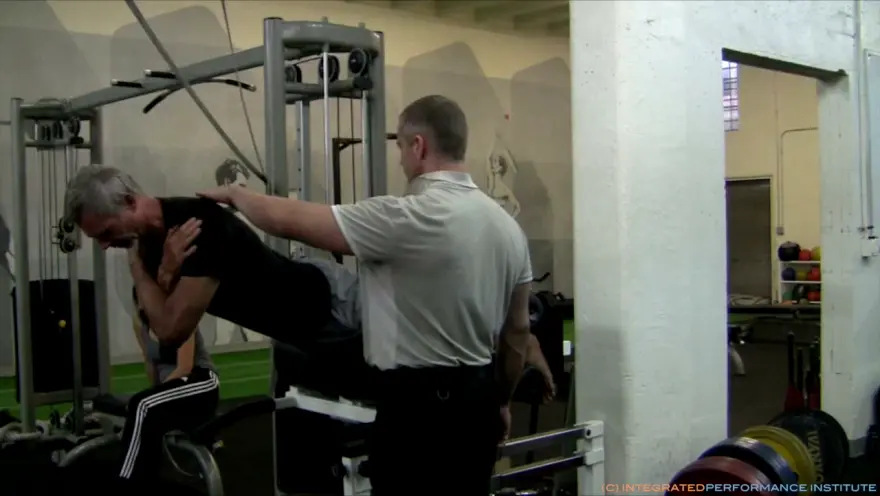
Don’t Try to Add Function on Top of Dysfunction
In the pursuit of fitness, performance, or aesthetics, there’s a common mistake that even seasoned exercisers and some professionals make: attempting to add more function, load, or complexity to a body that’s fundamentally dysfunctional. This principle — don’t try to add function on top of dysfunction — forms one of the cornerstones of intelligent, long-term training.
The truth is, the body operates as an integrated system. When one part of that system fails to do its job, other areas compensate — often inefficiently and sometimes painfully. If those compensations are reinforced through strength training, speed work, or repetitive movement, dysfunction becomes hardwired.
The Nature of Dysfunction
Dysfunction can manifest in many ways: restricted joint mobility, poor movement patterns, weak stabilizers, or asymmetrical strength between muscle groups. These issues might not always present as pain, but they almost always lead to inefficiency. A shoulder that lacks stability, for example, may rely excessively on the neck or upper back musculature, creating tension, impingement, or chronic tightness.
Training on top of such dysfunction compounds the problem. It’s like building a house on an uneven foundation — the more you add, the more unstable it becomes. Strength without stability, or power without alignment, is not true progress.
Correct Before You Load
A well-designed training program begins with assessment, not assumption. Before prescribing exercises or increasing load, the practitioner must understand how the body moves — not just how much it can move.
Key considerations include:
-
Mobility – Are joints moving freely through their full range?
-
Stability – Are the stabilizing muscles firing appropriately to support movement?
-
Symmetry – Are both sides of the body contributing evenly?
-
Control – Can the client maintain alignment under minimal load before progressing?
Without these elements, adding volume, resistance, or intensity only strengthens dysfunction.
The Functional Hierarchy
A simplified hierarchy can summarize this principle:
-
Mobility before stability – Joints must have adequate range of motion before stability can be effectively trained.
-
Stability before strength – Strength built on an unstable foundation leads to compensation and eventual breakdown.
-
Strength before power – Power depends on controlled, coordinated strength, not chaos.
-
Power before skill – Only when the system is strong, stable, and efficient should high-speed or complex movements be introduced.
This hierarchy reminds us that progression isn’t just about lifting heavier or moving faster — it’s about developing competence before complexity.
Integration, Not Isolation
Human movement is inherently integrated. The body doesn’t operate in parts; it functions as a coordinated unit. When training focuses excessively on isolated muscles without considering their role within a kinetic chain, dysfunction can emerge.
For example, focusing on abdominal exercises without addressing hip stability or thoracic mobility may actually worsen core function by creating rigidity where dynamic control is needed. True functional training restores harmony between mobility and stability, allowing force to be generated and transmitted efficiently through the entire system.
Assessment and Reassessment
Correcting dysfunction isn’t a one-time event — it’s an ongoing process. The body continually adapts to stress, load, and posture. Regular assessment ensures that progress is functional, not compensatory.
Movement screens, mobility tests, and simple control assessments (such as cervical flexor activation or single-leg stability) can reveal early signs of imbalance long before pain develops. By addressing these issues early, the practitioner can refine programming and reduce long-term injury risk.
The Takeaway
Training should enhance function, not mask dysfunction. A body that moves well will perform well, recover efficiently, and remain resilient under load. Whether the goal is improved performance, strength, or longevity, the principle remains the same:
Build a foundation of function first — then layer performance on top.
Adding load, intensity, or complexity before restoring proper movement doesn’t create strength; it creates strain. True progress requires patience, precision, and respect for the body’s hierarchy of function.
Peter Rouse is an elite personal trainer in Queenstown, New Zealand, specializing in performance training, corrective exercise, and injury prevention. With over 20 years of experience in exercise physiology, biomechanics, and human performance, Peter helps clients—from everyday professionals to elite athletes—achieve lasting results through evidence-based training systems. As the founder of the Integrated Performance Institute, he also educates fitness professionals worldwide through advanced workshops, seminars, and certification programs. Learn more about his personal training services at www.peterrouse.com and professional education programs here.