
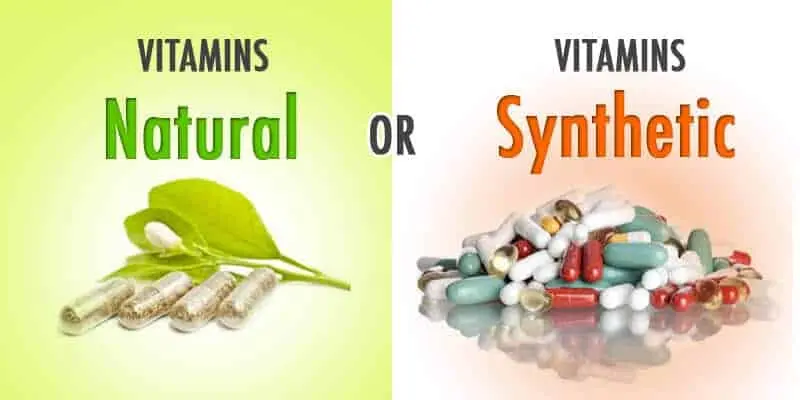
Natural vs Synthetic Vitamins
Understanding What You’re Really Taking
Over the past decade, headlines like “Vitamins May Increase Cancer Risk” or “Supplements Could Shorten Lifespan” have created widespread confusion about the safety and efficacy of nutritional supplements. For many, this has raised doubts about practices as common as taking a daily multivitamin or consuming fortified foods.
However, what’s rarely explained in these alarmist reports is a critical detail: most of the studies linking vitamins to negative outcomes were conducted using synthetic, inactive forms of nutrients — not vitamins derived from whole food sources or containing biologically active compounds. This distinction matters greatly, both for safety and for the body’s ability to utilize these nutrients effectively.
The Core Difference: Natural vs. Synthetic
Many supplements on the market are produced using synthetic chemicals rather than extracted from food. While chemically similar on paper, synthetic vitamins differ significantly in how the body absorbs, metabolizes, and utilizes them.
From a biochemical perspective, a synthetic vitamin may appear identical to its natural counterpart. However, in practice, the body doesn’t always treat them the same way. Natural vitamins — particularly those in their active forms — are typically delivered within a complex matrix of enzymes, co-factors, and phytonutrients that enhance absorption and function.
Synthetic vitamins, stripped of this natural context, are often less bioavailable and may exist in inactive forms that the body must first convert before they can be used. This conversion process can be inefficient or impaired by genetic variations, liver stress, or nutrient deficiencies.
Over time, excessive intake of synthetic or inactive forms can contribute to nutrient imbalances, cellular stress, or even toxicity. In contrast, food-derived and active-form vitamins are generally recognized and utilized more efficiently, supporting long-term health rather than disrupting it.
What Does “Natural” Actually Mean?
In the supplement industry, the word “natural” can be highly misleading. Many assume it means “chemical-free” or “derived from whole foods,” but the scientific definition is far broader. Technically, any carbon-based compound — including petroleum derivatives — can be classified as natural.
This loophole allows manufacturers to use industrial chemicals such as petroleum esters, coal tar derivatives, or GMO corn syrup in their production process while still labeling the end product as natural.
Compounding this issue, these synthetic nutrients are typically inactive forms, meaning the body must convert them into their active counterparts before they become usable. For example, cyanocobalamin (a synthetic form of vitamin B12) must be converted into methylcobalamin or adenosylcobalamin — the forms the body actually uses.
As a result, consumers often have no idea that what appears to be a “natural” or “complete” vitamin may, in fact, be a synthetic, inactive product of laboratory chemistry.
Common Synthetic and Inactive Ingredients Found in Vitamins
To illustrate the point, here are some of the synthetic compounds commonly used to manufacture standard vitamin supplements — many of which are inactive forms:
-
Vitamin B1 (Thiamine Mononitrate, Thiamine Hydrochloride): Often produced from coal tar derivatives, hydrochloric acid, and acetonitrile.
-
Vitamin B6 (Pyridoxine Hydrochloride): Derived from a combination of petroleum ester, hydrochloric acid, and formaldehyde; must be converted into pyridoxal-5-phosphate (P5P) to become active.
-
Vitamin B12 (Cyanocobalamin): Created by reacting cobalamin with cyanide; must be converted to methylcobalamin or adenosylcobalamin before it can be used by the body.
-
Vitamin C (Ascorbic Acid): Usually manufactured from hydrogenated GMO corn sugar processed with acetone; lacks the bioflavonoids and co-factors found in natural vitamin C complexes.
-
Vitamin B9 (Folic Acid): Synthesized from pteridine, para-aminobenzoic acid (PABA), and glutamic acid; must be converted to methylfolate before becoming biologically active.
These substances, while technically delivering the target molecule, are far removed from the nutrient’s original, active, food-based form — and may not provide the same physiological benefit.
Why It Matters
From a functional nutrition and performance perspective, the form, quality, and source of your micronutrients directly influence cellular function, recovery, and resilience.
A body fueled by synthetic or inactive compounds is not performing at its optimal level. Whole-food-based and active-form supplements offer synergistic nutrient complexes — vitamins, minerals, and plant compounds working together to support natural biochemical pathways.
This is particularly important for athletes, high performers, and anyone seeking to optimize energy metabolism, nervous system function, hormonal balance, and immune resilience.
How to Choose the Right Supplements
If supplementation is part of your wellness strategy, focus on food-based, active-form, third-party-tested products made from real plants, fruits, and vegetables rather than synthetic isolates.
The body doesn’t just need vitamins and minerals — it needs them in the right form. Many cheaper supplements use inactive or synthetic versions of nutrients that are poorly absorbed and may place extra strain on the liver to convert them into usable forms. In contrast, active-form nutrients (such as methylated B vitamins, P5P for B6, or natural vitamin E isomers) are ready for immediate use by the body, offering superior bioavailability and performance benefits.
Look for brands that:
-
Use active, bioavailable forms of nutrients (e.g., methylcobalamin instead of cyanocobalamin for B12, or methylfolate instead of folic acid).
-
Disclose ingredient sourcing and provide full transparency about manufacturing practices.
-
Use minimal processing to preserve the nutrient complexity of whole-food sources.
-
Avoid artificial fillers, colors, or chemical additives.
While supplements can never replace a nutrient-dense diet, strategically selected, natural, active-form formulations can complement your nutrition plan — supporting energy production, recovery, cognitive performance, and long-term vitality.
Key Takeaway
The debate over natural versus synthetic vitamins isn’t just academic — it’s fundamental to how we approach health and human performance.
Synthetic and inactive forms may be cheaper and more stable, but they’re often less effective and potentially harmful when used long term.
True health optimization starts with whole foods, biologically active nutrients, and informed supplementation practices that align with your physiology — not against it.
The next time you reach for a supplement, look beyond the label. Ask where it comes from, how it’s made, and whether it contains the active forms your body can truly utilize.
Disclaimer
The information on this website is provided for general educational and informational purposes only. It is not intended as medical advice, diagnosis, or treatment. Always consult a qualified healthcare professional before making changes to your diet, supplements, or exercise routine. Peter Rouse Personal Training does not assume any responsibility for actions taken based on the content provided